

How Connected Business Screens Work in Tourism
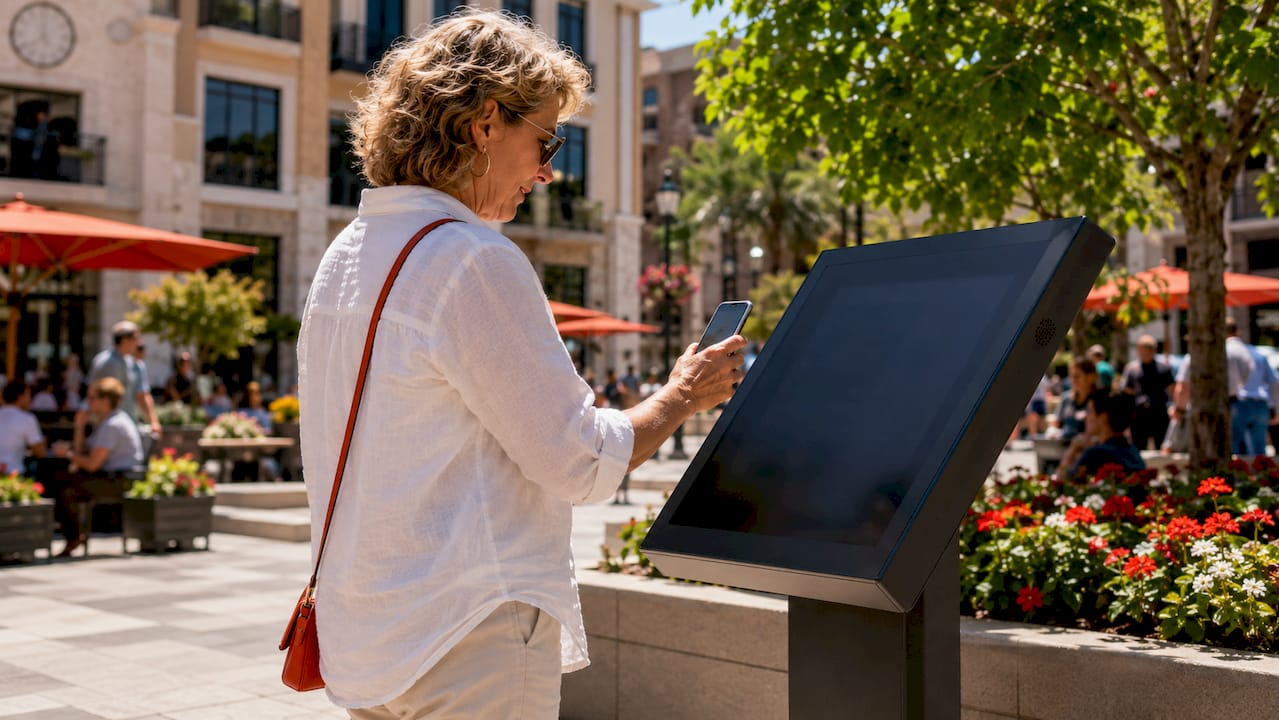
Connected business screens are digital display systems that deliver real-time, interactive information to visitors at the exact moment they need it. In the tourism industry, the standard term for this technology is digital signage, and understanding how connected business screens work in tourism is the first step toward using them effectively. These systems replace static printed boards with live, updatable content that responds to visitor behavior, time of day, and local events. The result is a more informed traveler, a more visible local business community, and a destination that feels genuinely organized and welcoming.
How do connected business screens improve visitor engagement?
Connected screens in tourism work by turning passive information displays into two-way experiences. A visitor standing at a transit hub does not just read a static map. They tap a touchscreen, select their language, scan a QR code, and walk away with a personalized audio guide on their phone. That shift from passive to active is the core mechanism behind digital signage in tourism.
The Paphos smart signage initiative in Cyprus is one of the clearest examples of this in action. The system recorded over 140,000 visitor interactions across 150 signs in 2025. That figure represents real travelers choosing to engage with a screen rather than ignore it, which is the benchmark every destination marketer should measure against.
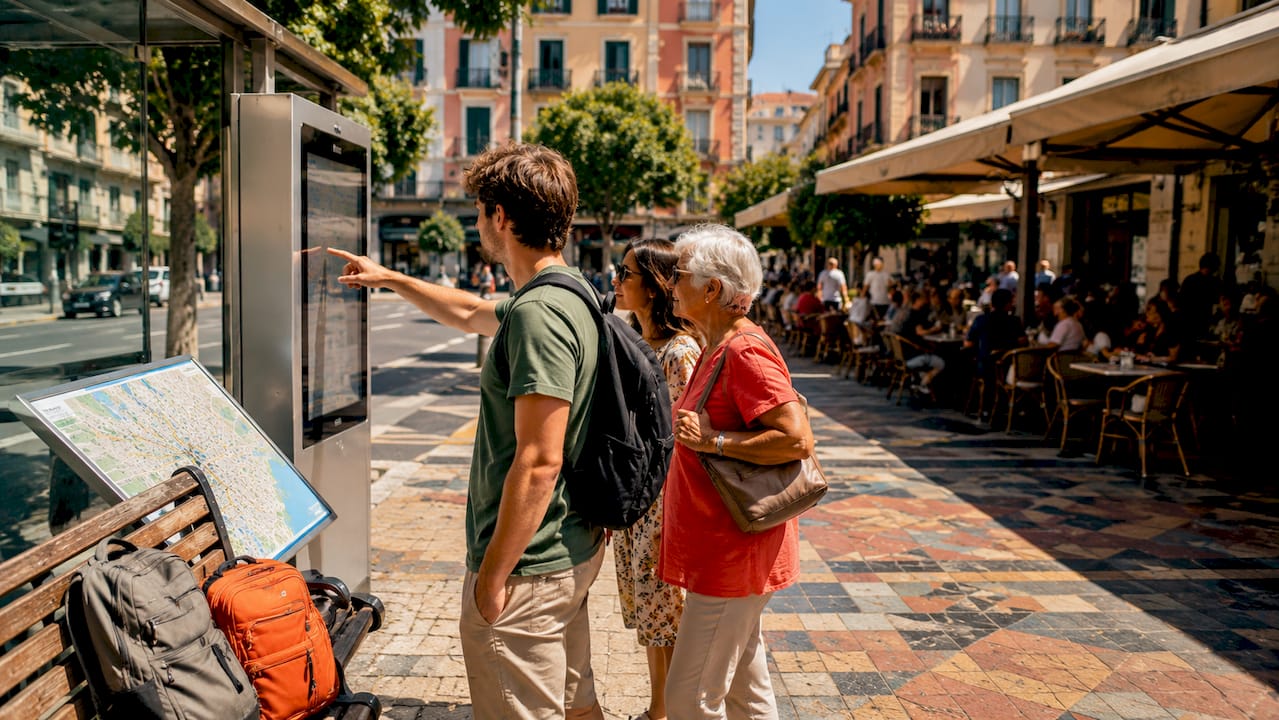
Iwatsuki Station in Japan took a similar approach when it replaced static bulletin boards with interactive digital signage in april 2026. The new system offers real-time municipal information, multilingual maps, and touch-panel tourist guides, all integrated with QR codes for mobile access. The key insight is that mobile QR integration extends the visitor experience well beyond the physical screen itself.
The features that drive the highest engagement in connected screen tourism networks include:
Interactive wayfinding maps that let visitors tap to find nearby attractions, restrooms, or transit stops
Multilingual content that switches language on demand, removing barriers for international travelers
QR code access that sends full audio guides, 360-degree virtual tours, and photo galleries directly to a visitor’s phone
Real-time event and transit updates that keep content accurate without requiring staff intervention
Accessibility options including larger text, audio output, and simplified navigation for diverse visitor needs
The Paphos system specifically allows visitors to select their preferred language after scanning a QR code, then access multilingual audio guides, photographs, videos, and 360-degree virtual tours. That level of personalization was previously only possible through a human guide or a dedicated app download.
Pro Tip: Place QR codes at eye level on every screen and test them monthly. A broken QR code at a high-traffic location erodes visitor trust faster than a blank screen.
How do connected screens support local businesses and regional attractions?
Connected screens in travel settings do more than orient visitors. They actively drive foot traffic and spending toward local businesses. The mechanism is straightforward: a screen in a visitor center shows a walking route that passes three restaurants, a heritage site, and a boutique shop. Each stop on that route gets a brief promotional moment on the display. Visitors follow the route. Businesses get customers they would not have reached otherwise.
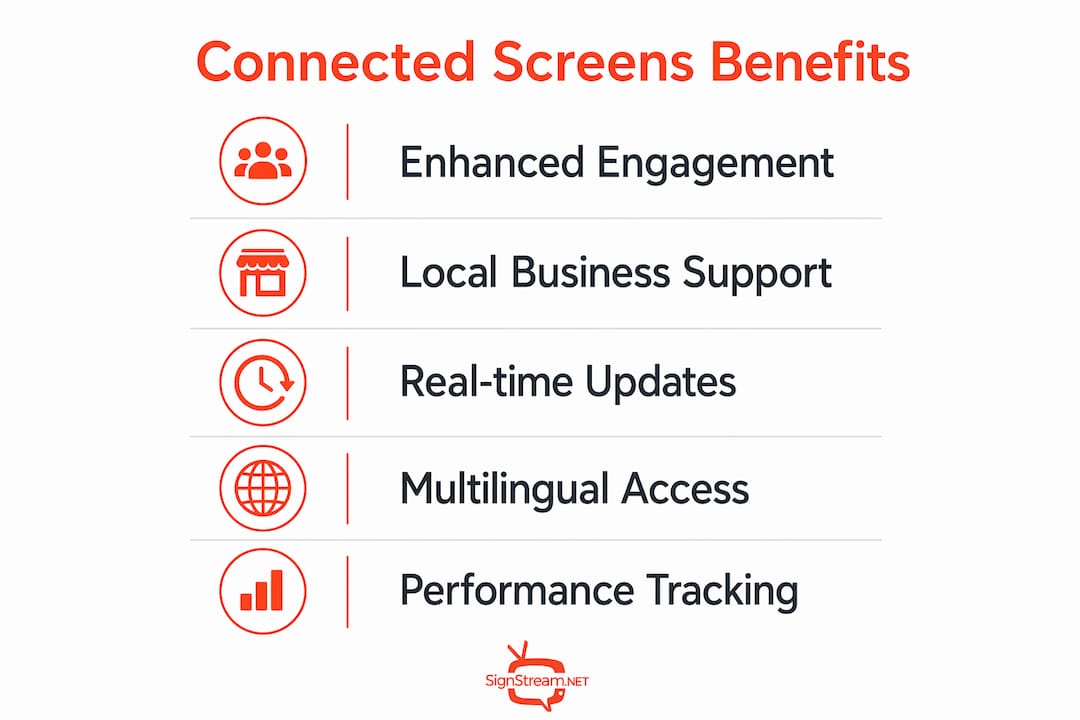
Strategic content placement on connected screens supports local businesses while keeping the primary focus on guiding visitors. The distinction matters. Screens that feel like billboards lose visitor trust. Screens that feel like helpful guides build it, and the local business promotions embedded within them benefit from that trust.
Digital storytelling is another underused tool in this space. A screen near a heritage site can show archival photographs, short video clips, and community stories that create emotional connection before a visitor even walks through the door. That emotional engagement translates directly into longer visits and higher spending.
Effective content strategies for supporting local commerce through connected screens include:
Time-based scheduling that shifts content based on visitor flow, showing dining ads in the afternoon and event listings in the morning
Walking route promotion that connects shops, restaurants, and cultural sites in a single curated path
Heritage storytelling using short video and photography to build interest in local landmarks
Special offer displays that rotate local business promotions without overwhelming the informational content
Shared display networks that allow multiple businesses to cross-promote across locations, multiplying reach without multiplying cost
Pro Tip: Schedule dining and entertainment ads to appear between 2:00 PM and 6:00 PM, when visitors are most likely to be deciding where to spend the rest of their day. Morning slots work better for attraction and tour promotions.
What are the key implementation steps for connected screens in tourism?
Getting the technology right matters less than getting the placement and content strategy right. A high-quality screen in the wrong location delivers poor results. A well-placed screen with outdated content damages credibility. Tourism professionals need a clear framework before they deploy.
Choosing the right locations
The highest-value locations for digital signage in tourism are transit hubs, visitor centers, hotel lobbies, ferry terminals, and the entrances to major attractions. These are the points where visitors are already pausing, already looking for information, and already open to direction. New Zealand tourism hubs demonstrate this well, using content scheduling that shifts focus based on the time of day, serving wayfinding content to morning cruise traffic and dining promotions in the afternoon.
Managing content and scheduling
Content management is where most implementations succeed or fail. A screen that shows the same content for three weeks stops being useful. The best connected screen networks use cloud-based platforms to push updates remotely, schedule content by time and audience, and rotate promotional material without requiring on-site staff. Platforms like Signstream make this possible from any device, without requiring technical expertise.
Ensuring reliability and accessibility
Poorly functioning screens reduce visitor confidence in the information they display and hurt the overall destination experience. Reliability is not optional. Screens must be maintained on a regular schedule, with remote monitoring to catch failures before visitors notice them. Accessibility features including adjustable text size, audio output, and multilingual interfaces should be built into the system from the start, not added later.
The table below outlines the key implementation factors and what each one requires in practice:
Implementation factor | What it requires |
Screen placement | High-traffic pause points: transit hubs, visitor centers, attraction entrances |
Content scheduling | Cloud-based platform with time-based and audience-based rules |
Multilingual support | Language selection built into the interface, not a separate system |
Reliability | Remote monitoring, regular maintenance schedule, backup content |
Accessibility | Large text options, audio output, simple navigation structure |
For a deeper look at building these networks at scale, the tourism digital screen guide from Signstream covers professional deployment strategies in detail.
How do you measure success in a connected screen tourism network?
Measurement is what separates a well-run connected screen network from one that just looks good on paper. The Paphos system provides the clearest model: detailed scan statistics from QR code interactions give the tourism board precise data on which content attracts engagement and which does not. That data drives content decisions, not guesswork.
The primary metrics for connected screen tourism networks fall into three categories. Interaction volume measures how many visitors engage with a screen, scan a QR code, or select a language option. Content performance measures which specific pieces of content generate the most scans, dwell time, or follow-through actions. Business impact measures foot traffic changes, promotional redemption rates, and visitor spending in areas served by the screens.
Real-time dashboards give destination managers the ability to act on this data immediately rather than waiting for monthly reports. That speed matters when a local event changes visitor flow patterns overnight or when a piece of content stops performing.
Pro Tip: Review QR scan data weekly during peak season. A sudden drop in scans at a specific location usually signals a hardware issue or a content problem, both of which are fixable within hours if caught early.
The most effective optimization cycle for connected screen networks works as follows. Collect interaction data from QR scans and touchscreen sessions. Identify the content types and locations with the highest and lowest engagement. Adjust scheduling, content format, or screen placement based on those findings. Test the changes over a two-week period, then repeat. This cycle, applied consistently, turns a basic screen network into a genuinely useful visitor tool that also drives measurable results for local businesses.
Key Takeaways
Connected business screens deliver the most value in tourism when they combine real-time content, mobile integration, and data-driven optimization across well-placed, well-maintained screen networks.
Point | Details |
Engagement is measurable | Paphos recorded 140,000+ interactions across 150 signs, proving QR-based metrics work at scale. |
Placement determines performance | Transit hubs, visitor centers, and attraction entrances generate the highest interaction rates. |
Content scheduling drives relevance | Shifting content by time of day, from wayfinding in the morning to dining ads in the afternoon, maximizes impact. |
Reliability builds trust | Poorly maintained screens reduce visitor confidence; remote monitoring prevents failures from going unnoticed. |
Data enables improvement | Weekly QR scan reviews and interaction analytics allow rapid content adjustments during peak season. |
Screens that feel like part of the place, not part of the pitch
The implementations I find most effective share one quality: the screens feel like they belong. They match the visual tone of the destination, they show content that genuinely helps visitors, and the local business promotions sit within that helpful context rather than dominating it. Tourism hubs benefit most when digital signage blends with local culture and environment rather than functioning as intrusive advertising.
The mistake I see most often is treating connected screens as a revenue tool first and a visitor tool second. That priority order produces screens full of ads that visitors learn to ignore. Flip the priority, and the ads actually work because visitors trust the screen enough to look at everything on it.
The other underestimated factor is ongoing content management. A screen network launched with great content and then left untouched for six months becomes a liability. The destinations that get the best long-term results are the ones that treat content updates as a regular operational task, not a one-time project. That requires a platform that makes updates genuinely easy, and it requires someone with clear ownership of the content calendar.
My strongest advice for tourism professionals is to start with one or two high-traffic locations, measure everything, and use that data to make the case for expanding the network. A single well-performing screen with documented results is more persuasive to stakeholders than a large network with no measurement in place. The AI guest experience tools emerging in hospitality also point toward where this technology is heading: screens that adapt content in real time based on visitor profiles and behavior, not just time of day.
— DKS
How Signstream helps tourism destinations build connected screen networks
Tourism destinations need a platform that handles content scheduling, remote updates, and performance tracking without requiring a dedicated IT team. Signstream is built exactly for that.
Signstream’s signage management platform lets you update content across unlimited screens from any device, schedule promotions by time and audience, and monitor performance through built-in analytics. The ad exchange marketplace allows local businesses to cross-promote across partner locations, turning your screen network into a revenue-generating asset for the whole destination. Whether you manage a single visitor center or a district-wide network, Signstream gives you the tools to keep content fresh, relevant, and working hard for every business in your area. Getting started takes minutes, not months.
FAQ
What are connected business screens in tourism?
Connected business screens are networked digital displays that deliver real-time visitor information, wayfinding, event updates, and local business promotions in tourism settings. They replace static printed boards with live, remotely managed content.
How do QR codes extend the value of connected screens?
QR codes on connected screens let visitors access audio guides, multilingual content, virtual tours, and maps directly on their phones. The Paphos system recorded over 140,000 interactions using this approach across 150 signs in 2025.
Where should tourism destinations place connected screens?
The highest-performing locations are transit hubs, visitor centers, hotel lobbies, ferry terminals, and attraction entrances, where visitors are already pausing and actively looking for information.
How do you measure the impact of digital signage in tourism?
Measure QR code scan volume, touchscreen interaction rates, and content-specific engagement data. Review this data weekly during peak season and adjust content scheduling based on what performs best.
Can connected screens support local businesses as well as visitors?
Connected screens promote local businesses through time-scheduled ads, walking route promotions, and shared display networks, all without reducing the informational value that makes visitors trust the screen in the first place.
Recommended
Comments