

Digital Signage and Club Revenue: A Practical Guide

Digital signage is a direct revenue driver for clubs, converting screens into advertising inventory, sponsorship platforms, and member engagement tools that generate measurable income. The role of digital signage in club revenue goes well beyond displaying schedules or menus. It creates commercial opportunities that static boards simply cannot match. Stockport County’s stadium upgrade delivered a 25% revenue increase year on year after installing dynamic LED and perimeter signage. Signstream clients in fitness and hospitality report similar gains, with attendance and sales climbing after deployment.
How does digital signage expand advertising and sponsorship revenue in clubs?
Digital signage transforms every screen in your venue into a commercial asset. Static printed boards offer one advertiser, one message, and zero flexibility. A digital display network lets you rotate multiple sponsors in a single match or session, package premium placements by time slot, and charge accordingly. That shift from static to dynamic inventory is where the real revenue growth lives.
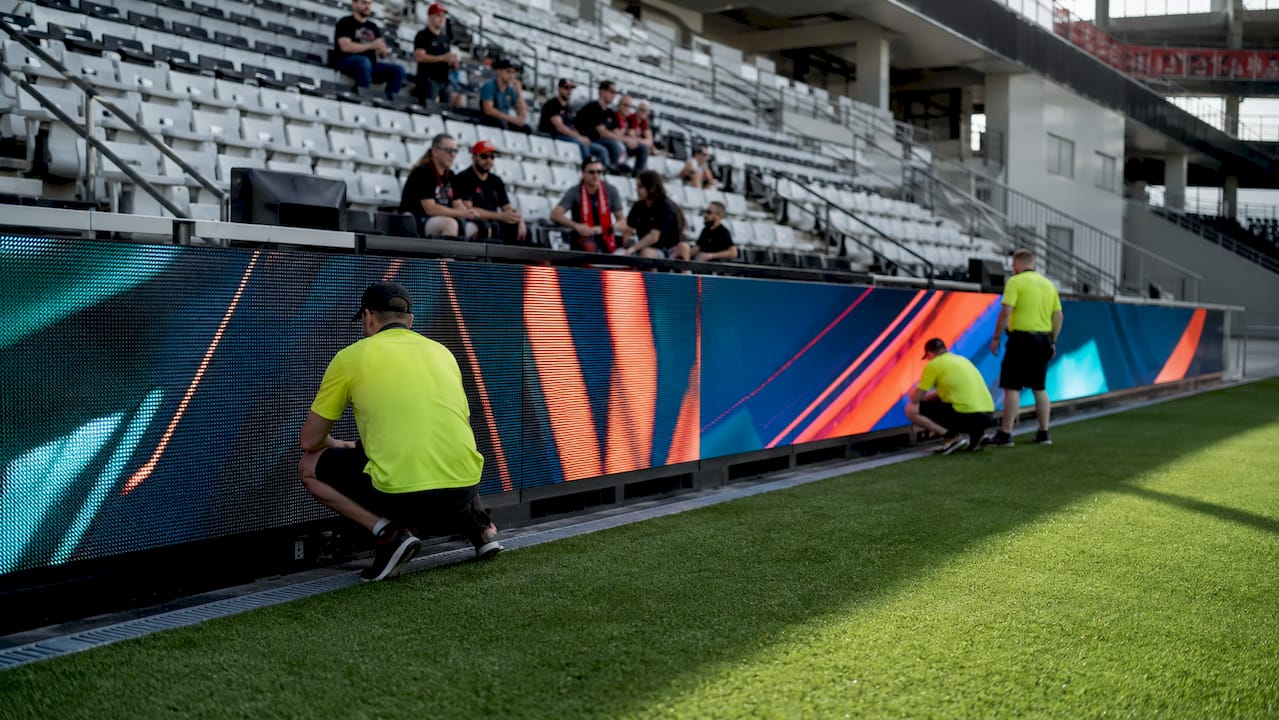
Stockport County’s installation of an 81.3 square metre LED screen and a digiBOARD perimeter system is the clearest proof of this model. The club expanded its sponsorship opportunities and advertising inventory, enabling targeted activations that local and regional partners were willing to pay a premium for. The result was a 25% year-on-year revenue lift. That is not a marginal gain. It is a structural change in how the club monetizes its audience.
Static vs. digital advertising: what the numbers show
Factor | Static signage | Digital signage |
Sponsor slots per display | 1 | Multiple, rotating |
Content update speed | Days (print lead time) | Instant, remote |
Viewer recall rate | 50% | |
View rate vs. static | Baseline | 400% higher view rate |
Cost of content changes | High (reprint) | Near zero |
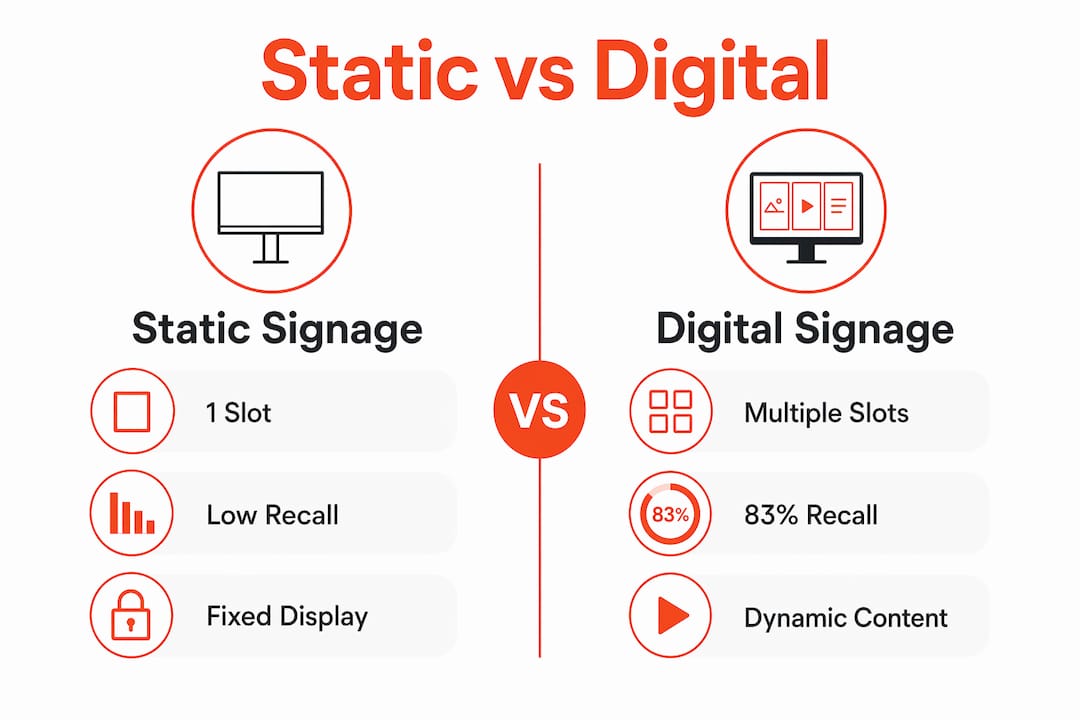
The recall and view rate gap is significant. Advertisers pay for attention. When your screens deliver 83% viewer recall versus 50% for print, you can justify higher sponsorship rates and attract partners who previously overlooked your venue.
Pro Tip: Package your digital inventory in tiers: premium placements during peak hours or live events, standard rotations during off-peak times. Tiered pricing gives local businesses an entry point while protecting your top-rate slots for anchor sponsors.
Digital signage also opens the door to targeted advertising before and after virtual classes or events, creating incremental income streams that did not exist with static boards. Fitness operators using this model have attracted advertiser interest from supplement brands, local retailers, and health services. Your screens become a media network, not just a communication tool.
How does digital signage increase member engagement and drive sales?
Member engagement is the engine behind repeat spending. When members see relevant, timely content, they act on it. Digital signage campaigns generate 2.4 times the foot traffic of static displays and produce a 9.3% average sales lift in measured studies. That lift compounds across bar sales, retail, class bookings, and event ticket purchases.
Here are the four ways dynamic displays convert engagement into revenue:
Real-time promotions. Flash a happy hour offer, a last-minute class opening, or a merchandise discount at the exact moment members are in the building. Time-based content targets the right person at the right moment, which static boards cannot do.
Event and class announcements. Visible, updated schedules reduce missed bookings and cancellations. Members who see a class advertised on the way to the locker room are more likely to join. Signstream clients have reported a 25% rise in class attendance after deploying dynamic scheduling screens.
Amenity visibility. Many members do not know every service your club offers. Screens in high-traffic corridors that showcase club amenities drive upsell opportunities for personal training, spa services, or premium memberships.
Impulse purchases. Digital signage in retail and restaurant environments increases average order value by 15–30% and boosts featured product sales by up to 30%. A well-placed screen near your bar or pro shop works the same way.
Pro Tip: Schedule content to match member behavior patterns. Morning screens should promote breakfast offers and early classes. Evening screens should push bar specials, upcoming events, and weekend bookings. Content relevance drives conversion.
Replacing printed promotional materials with digital content also cuts costs. Businesses report a 35% cost reduction after switching from printed materials to digital signage. Lower overhead means more of your promotional budget goes toward content that actually performs.
What are the operational benefits of digital signage for multi-location clubs?
Operational reliability is not a secondary concern. For multi-location club operators, a screen that goes dark during a live event or a class cancellation that does not update in time directly costs you money and member trust. Hardware failures correlate with cancellations and churn. That is a revenue problem, not just a technical one.
BrightSign and Gymstream’s deployment across Everyone Active’s 140 studios is the benchmark case. The operator reduced hardware expenses by 50% and reported zero playback failures after standardizing signage technology and enabling remote management. Running 140 locations simultaneously without a single failure is a significant operational achievement.
The key operational advantages of a reliable, centrally managed system include:
Remote content updates. Push schedule changes, cancellations, or promotions to every screen in every location from one device, instantly. No staff visits, no USB drives, no delays.
Hardware standardization. Running the same hardware across all locations cuts support costs and simplifies troubleshooting. Fewer vendors, fewer failure points.
Scalability at no extra cost. Signstream deploys custom media networks on unlimited screens without additional charges. That model protects your margins as you grow.
Reduced printing costs. Eliminating printed schedules and promotional materials removes a recurring expense that adds up fast across multiple sites.
Operational impact at a glance
Metric | Before digital signage | After digital signage |
Hardware cost | High, fragmented | Up to 50% lower |
Playback failures | Occasional | Zero (standardized systems) |
Content update time | Hours to days | Instant, remote |
Printing costs | Recurring | Reduced by up to 35% |
Reliable infrastructure also protects your sponsorship revenue. If a sponsor’s ad fails to display during a sold-out event, you have a credibility problem with that partner. Systems that guarantee uptime protect both your commercial relationships and your reputation.
How do you design a digital signage strategy for long-term revenue growth?
A digital signage strategy built for revenue growth starts with commercial intent, not just communication. Most clubs install screens to display schedules and then discover the advertising potential later. Designing your signage hardware placement and content rotation with sales packaging in mind from day one maximizes sponsor and advertiser revenue from the start.
Here is how to build a strategy that compounds over time:
Map your high-traffic zones first. Entrances, locker room corridors, bar areas, and reception desks are your premium inventory. Place screens where dwell time is highest and where purchase decisions happen.
Build your content calendar around commercial goals. Every week should include promotional slots, sponsor rotations, and event-driven content. Treat your screens like a media schedule, not a noticeboard.
Integrate with your sales team. Your sponsorship and membership sales staff should know exactly what screen inventory is available and at what price. Digital signage is a sales product, not just an operations tool.
Use analytics to adjust content dynamically. Signstream provides performance analytics so you can track which content drives action and which does not. Drop what is not working and scale what is.
Leverage cross-promotion networks. Signstream’s ad exchange marketplace lets you display ads from other local businesses on your screens and earn revenue from them. That turns idle screen time into passive income.
Boosting local visibility through in-store digital networks is a proven path for clubs that want to grow their commercial footprint without large marketing budgets. The screens you already have are the starting point.
Key Takeaways
Digital signage drives club revenue by converting screens into advertising inventory, improving member engagement, and reducing operational costs across every location you manage.
Point | Details |
Sponsorship revenue growth | Dynamic ad rotations let clubs sell multiple sponsor slots per screen, increasing total inventory value. |
Member engagement lifts sales | Real-time promotions and visible amenities drive impulse purchases and class bookings. |
Operational reliability protects income | Zero-failure systems prevent cancellations and protect sponsor relationships across multi-location clubs. |
Cost savings improve ROI | Replacing printed materials cuts costs by up to 35%, freeing budget for higher-performing content. |
Strategy from day one | Planning screen placement and content rotation with commercial goals in mind maximizes long-term revenue. |
Why most clubs are leaving money on the table with their screens
I have worked with enough club operators to know the most common mistake: screens get installed for communication and never get treated as commercial assets. The schedule goes up, the logo rotates, and that is it. Meanwhile, the venue is sitting on advertising inventory that local businesses would pay for today.
The Stockport County case is not an outlier. It is what happens when a club decides to treat its digital infrastructure as a revenue platform from the start. An 81.3 square metre LED screen and a perimeter system are not cheap. But the 25% revenue increase paid for that investment faster than most traditional marketing spend ever would.
The other mistake I see is over-engineering the content. Clubs hire designers, build elaborate templates, and then update screens once a month. The value of digital signage is speed and relevance. A simple, timely message about tonight’s event beats a polished graphic from last week every time. Start with what you can manage, then scale the production quality as your revenue grows.
My honest advice: treat your first screen network as a media business. Know your audience, know your peak hours, and price your inventory accordingly. The technology is affordable. The strategy is what separates clubs that see a return from those that just have nice screens.
— DKS
How Signstream helps clubs turn screens into revenue
Signstream is built for exactly the kind of commercial strategy this article describes. The cloud-based digital signage platform lets you manage unlimited screens from any device, push content instantly, and run sponsor rotations without technical expertise. You get performance analytics to track what is working and an ad exchange marketplace to earn revenue from third-party advertisers on your existing screens. Clubs that want to monetize their signage network without a large upfront investment can explore affordable pricing plans designed for venues of all sizes. If you want to generate passive income from your screens, the ad display network is the fastest path to getting there.
FAQ
How does digital signage increase club revenue?
Digital signage increases club revenue by expanding advertising inventory, enabling dynamic sponsor rotations, and driving member spending through real-time promotions. Venues like Stockport County have reported a 25% year-on-year revenue increase after deploying dynamic LED and perimeter signage systems.
What is the impact of digital displays on member engagement?
Digital signage campaigns generate 2.4 times the foot traffic of static displays and produce a 9.3% average sales lift. Visible, timely content for classes, events, and promotions directly increases bookings and impulse purchases.
How reliable is digital signage for multi-location clubs?
Standardized digital signage systems with remote management can achieve zero playback failures across large networks. BrightSign and Gymstream’s deployment across 140 Everyone Active studios cut hardware costs by 50% with no reported failures.
Can digital signage replace printed promotional materials?
Yes. Businesses report a 35% cost reduction after replacing printed materials with digital signage. The savings compound across multiple locations and free up budget for higher-performing promotional content.
How do clubs monetize screens beyond internal communication?
Clubs monetize screens by selling advertising slots to local and regional sponsors, running tiered sponsorship packages, and joining ad exchange networks. Signstream’s ad exchange marketplace allows clubs to display third-party ads and earn revenue from screen time that would otherwise go unused.
Recommended
Comments