

Types of Tourism Area Screen Networks: 2026 Guide
Updated: 6 days ago

Tourism area screen networks are digital signage systems deployed across distinct types of tourism environments, primarily transit hubs, hospitality venues, and attraction sites. Each category carries different technical requirements, audience behaviors, and content strategies. The industry term for these systems is “place-based digital out-of-home” (DOOH) media, and understanding how each network type works gives tourism professionals a real edge in driving visitor engagement. Deployment of these networks now integrates anonymized mobile advertising IDs to track campaign performance and link screen exposure to tourism outcomes.
1. Types of tourism area screen networks: the three core categories
Tourism area screen networks fall into three primary categories: transit-based, hospitality-based, and attraction-based. Each category serves a different stage of the visitor journey and demands a different approach to content, placement, and technology. Knowing which category fits your venue is the first decision you make before buying a single screen.
Transit networks cover airports, train stations, ferry terminals, and bus depots. Hospitality networks operate inside hotels, resorts, and serviced apartments. Attraction networks appear in museums, theme parks, cultural heritage sites, and entertainment precincts. The right screen network strategy depends entirely on which category you operate in.
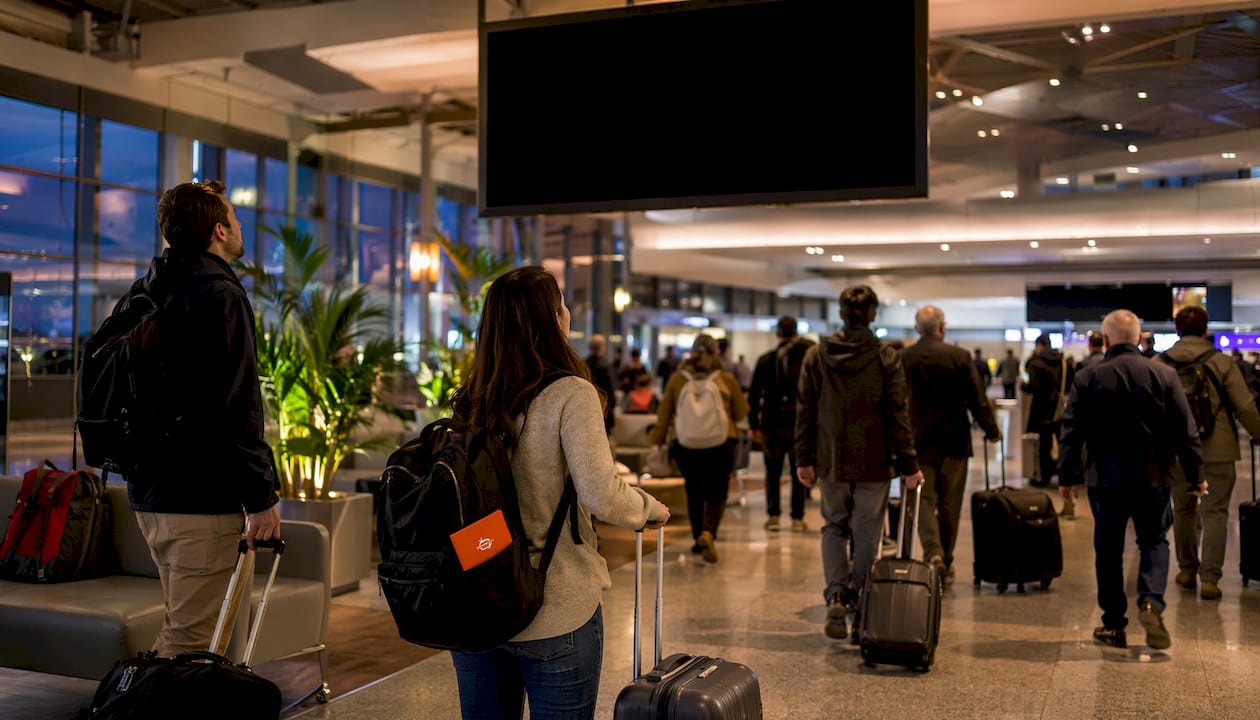
2. Transit-based screen networks
Transit screen networks are the highest-traffic category in place-based DOOH media. Airports and train stations process millions of visitors per year, but individual dwell times are short. That constraint shapes every content decision you make.
Content must be fast and direct
Content under 10 seconds performs best in transit environments. Visitors are moving, distracted, and time-pressured. A 30-second brand story that works beautifully in a hotel lobby will be ignored entirely at a departure gate.
Effective transit screen formats include:
Countdown and wayfinding displays that reduce passenger anxiety and increase brand trust
Flash promotions tied to retail or food outlets within the terminal
Destination teasers that plant ideas for future travel
Real-time flight or service updates integrated with live data feeds
Zoning and placement rules
Transit environments carry strict zoning restrictions. Screens near security zones, emergency exits, or safety signage must comply with local transport authority regulations. Brightness levels are often capped to avoid distraction for drivers or pilots near tarmac areas.
Pro Tip: Place screens at eye level in queuing zones, not above head height. Passengers waiting in line have the highest dwell time in any transit environment, and that is your best window for engagement.
Anonymized mobile data has become a key tool in transit networks. Operators using mobile tracking report a 20–30% improvement in correlating screen exposure with visitor behavior since 2024. That data lets you adjust content in real time based on crowd density and flight schedules.
3. Hospitality-based screen networks
Hotel and resort screen networks operate in a fundamentally different environment. Guests have chosen to be there. They are relaxed, curious, and open to influence. That mindset creates a much richer opportunity for content depth and interactivity.
The set-jetting opportunity
Set-jetting is the practice of traveling to destinations made famous by films or television shows. 80% of leading hospitality destinations now tailor screen content to local filming locations, using digital signage to drive secondary tourist behavior. A hotel near a recognizable filming location can use lobby screens to show curated content that connects the guest’s viewing history to a bookable local experience.
Effective hospitality screen strategies include:
Film-to-reality content loops that show a scene from a popular series followed by a map and booking link for the actual location
QR code integration that lets guests tap through from the screen to a mobile itinerary
Guest-specific welcome messages triggered by check-in data
Local experience promotions tied to partner restaurants, tour operators, and cultural sites
Immersive hotel screen content linked to spatial computing and local discovery is reshaping how properties compete for guest attention in 2026.
Pro Tip: Sync your lobby and corridor screens with the guest itinerary system. A guest who booked a wine tour should see wine region content on their floor’s screen the morning of their tour.
Film-to-reality loops work best when they connect directly to bookable experiences via QR codes or app integration. The screen becomes a conversion tool, not just a display. Property-specific QR codes paired with short video messaging give every resort a local identity that generic in-room TV channels cannot match.
4. Attraction-based screen networks
Museums, theme parks, national parks, and cultural heritage sites present the most complex deployment environment of the three categories. You are balancing visitor engagement with environmental sensitivity and spatial planning rules.
Zoning models that govern screen placement
The Recreational Opportunity Spectrum (ROS) framework classifies tourism areas into core protection zones, buffer zones, and intensive development zones. Developed rural zones support three times more managed digital signage capacity than natural rural zones. That ratio directly affects how many screens you can deploy and at what brightness level.
Zone Type | Screen Intensity | Content Approach |
Core protection zone | Minimal or none | Wayfinding only, low brightness |
Buffer zone | Moderate | Interpretive content, nature-themed |
Intensive development zone | Full deployment | Interactive, promotional, high-impact |
Ignoring spatial and environmental constraints when deploying screens leads to poor visitor perception and reduces destination resilience. A theme park can run full-brightness interactive kiosks near its entrance plaza. A heritage site cannot do the same near its protected structures.
Pro Tip: Commission a zoning audit before specifying screen hardware. The audit tells you which zones permit which screen types, saving you from expensive reinstallation after a compliance review.
5. Comparing screen network types: features and ideal use cases
Each network type suits a different operator profile. The table below maps the key variables across all three categories.
Feature | Transit networks | Hospitality networks | Attraction networks |
Primary location | Airports, stations, terminals | Hotels, resorts, serviced apartments | Museums, parks, cultural sites |
Typical dwell time | Under 5 minutes | Hours to days | 1–4 hours |
Content type | Short-form, high-impact | Interactive, personalized | Interpretive, immersive |
Technical complexity | High (live data feeds) | Medium (PMS integration) | Medium to high (zoning compliance) |
Audience mindset | Distracted, time-pressured | Relaxed, exploratory | Curious, engaged |
Hybrid networks are worth considering for complex tourism precincts that combine a transit node with retail and hospitality. A major airport hotel, for example, benefits from both transit-style flash content in its lobby and hospitality-style personalized content in its corridors. Connected screen networks that span multiple venue types require a central content management system capable of pushing different content to different zones simultaneously.
6. How screen networks impact tourism and marketing outcomes
Screen networks do more than display content. They actively shape visitor flow, spending behavior, and regional tourism economics. Understanding how screen networks impact tourism at a systemic level helps you make a stronger business case for investment.
Linking high-traffic core sites with peripheral attractions through screen networks promotes sustainable regional tourism. A visitor at a major city museum who sees a screen promoting a nearby artisan market is more likely to extend their stay and spend in a secondary location. That is the network effect in practice.
Key marketing outcomes from well-deployed screen networks include:
Visitor flow redistribution away from overcrowded sites toward undervisited attractions
Real-time content adjustment based on crowd data, weather, or event schedules
Measurable ROI through anonymized mobile ID tracking linked to screen exposure
Cross-promotion revenue when operators sell screen time to local partners
Long-term tourism economy sustainability depends on connecting core and peripheral tourism nodes through digital signage networks to distribute visitor load. A screen network that only promotes the most famous attraction in a region reinforces overcrowding. One that actively promotes the full regional offer builds a healthier destination economy.
Digital signage deployment must adapt to physical, social, and ecological constraints to maintain destination resilience. That means building flexibility into your content management system from day one, not retrofitting it after complaints arrive.
Key takeaways
The most effective tourism screen networks match content format, technical setup, and deployment intensity to the specific venue category they serve.
Point | Details |
Match content to dwell time | Transit screens need sub-10-second content; hospitality screens can run longer interactive formats. |
Use zoning frameworks | The ROS framework determines screen intensity by zone type, from core protection to intensive development. |
Set-jetting drives hospitality ROI | Linking screen content to filming locations and bookable itineraries converts guest attention into revenue. |
Mobile data improves targeting | Anonymized mobile tracking has improved screen-to-behavior correlation by 20–30% since 2024. |
Core-to-edge networks build regional economies | Connecting flagship sites to peripheral attractions through screens distributes visitor load and spending. |
What I’ve learned from watching tourism operators get screen networks wrong
Most operators I’ve observed focus entirely on the flagship screen at the entrance and neglect everything else. They spend the budget on one impressive display and leave the corridors, waiting areas, and secondary zones running static images from three years ago. That is a waste of the network effect that makes these systems valuable.
The operators who get the most out of their screen networks think in zones first and hardware second. They map visitor movement through the venue, identify the dwell-time peaks, and then specify screens that match those moments. A museum that places its most interactive content at the coat check queue, where visitors wait for three to five minutes, will outperform one that puts the same content at the entrance where people walk straight past.
The set-jetting trend is real and it is not slowing down. Hospitality operators who have not yet connected their screen content to local filming locations are leaving a measurable engagement opportunity on the table. The technology to do it is not expensive. The barrier is usually organizational: the marketing team does not talk to the front desk team, so the screens never reflect what guests actually booked.
My honest caution is about over-saturation. How connected business screens work is well documented, but knowing how they work does not mean more screens are always better. A heritage site that installs screens in every corner of a protected zone will damage visitor perception faster than any competitor could. Restraint is a feature, not a weakness.
— DKS
Signstream for tourism screen networks
Signstream is built for exactly the kind of multi-location, multi-zone screen management that tourism operators need. You can push different content to transit-facing lobby screens and guest-floor corridor screens from a single dashboard, with no technical expertise required.
The ad display network lets you monetize your screens by selling display time to local partners, turning your venue’s screens into a revenue channel rather than a cost center. Signstream deploys on unlimited screens at no extra charge, which makes scaling across a hotel group or attraction precinct genuinely affordable. If you want to see how the platform fits your specific venue type, book a session with the team and get a setup tailored to your network.
FAQ
What are the main types of tourism area screen networks?
Tourism area screen networks fall into three primary categories: transit-based, hospitality-based, and attraction-based. Each type requires different content formats, technical setups, and zoning considerations.
How long should content run on transit screens?
Transit screen content should run under 10 seconds per message. Short dwell times in airports and train stations mean visitors will not engage with longer formats.
What is set-jetting and how does it affect hospitality screen networks?
Set-jetting is travel motivated by film and TV filming locations. 80% of leading hospitality destinations now tailor screen content to local filming sites to drive secondary visitor behavior and bookings.
What is the Recreational Opportunity Spectrum and why does it matter for screens?
The Recreational Opportunity Spectrum (ROS) is a spatial zoning framework that classifies tourism areas by development intensity. It determines how many screens you can deploy and at what brightness in protected or natural zones.
Can screen networks generate revenue for tourism operators?
Screen networks generate revenue through cross-promotion, where operators sell display time to local partners. Platforms like Signstream include an ad exchange marketplace that connects venues with local advertisers directly.
Recommended
Comments