

Types of Restaurant Promotional Displays: 2026 Guide
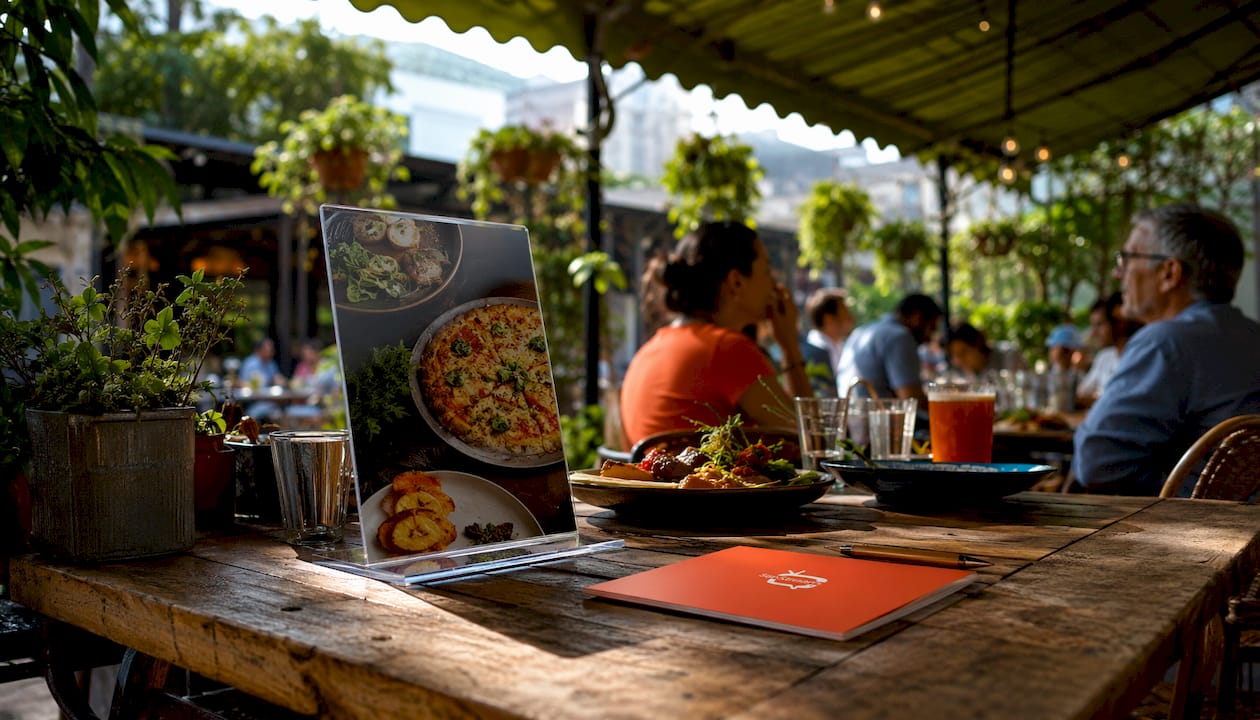
The most effective types of restaurant promotional displays fall into two broad categories: physical signage and digital signage. Physical options include tabletop displays, window posters, menu boards, wall-mounted signage, acrylic sign holders, outdoor banners, and sidewalk boards. Digital options range from cloud-managed menu boards to interactive screens with QR codes, countdown timers, and event calendars. Most restaurants that see real results from their signage use a mix of both, letting physical displays anchor the brand while digital screens handle the fast-moving content like daily specials and happy hour countdowns.
Here is a quick-reference breakdown of the core display types and their primary roles:
Tabletop displays: Placed directly on dining tables to promote specials, upsells, and limited-time offers while guests are seated
Window posters and vinyl graphics: Attract foot traffic and communicate seasonal promotions or brand identity from the exterior
Menu boards: Physical chalkboards or printed boards, plus digital versions that update instantly from any device
Wall-mounted signage: Snap frames, poster holders, and acrylic panels positioned at eye level throughout the dining room
Digital signage screens: Dynamic displays that rotate content, schedule day-part menus, and sync with Google Calendar for events
Acrylic sign holders: Tabletop or wall-mounted holders that give a polished, professional look with easy content swaps
Outdoor banners, flags, and sidewalk boards: Budget-friendly tools for capturing passing foot traffic and promoting daily offers
QR code displays: Physical or digital prompts that connect guests to online menus, loyalty programs, or review pages
Seasonal and thematic displays: Rotating visual setups tied to holidays, events, or menu launches that keep the dining room feeling fresh
Combining physical and digital formats gives you promotional flexibility that neither approach delivers alone. A well-placed tabletop tent can drive an impulse dessert order, while a digital screen near the exit can consistently generate Google reviews without any staff effort.
What are the main types of restaurant promotional displays?
Tabletop displays, window posters, and menu boards are the most effective physical promotional tools in restaurants, serving to highlight specials, menu changes, and encourage impulse orders directly at the point of dining. But the full picture is wider than those three. Each display type has a specific job, and understanding that job is what separates a restaurant with a cohesive signage system from one that just has a lot of signs.
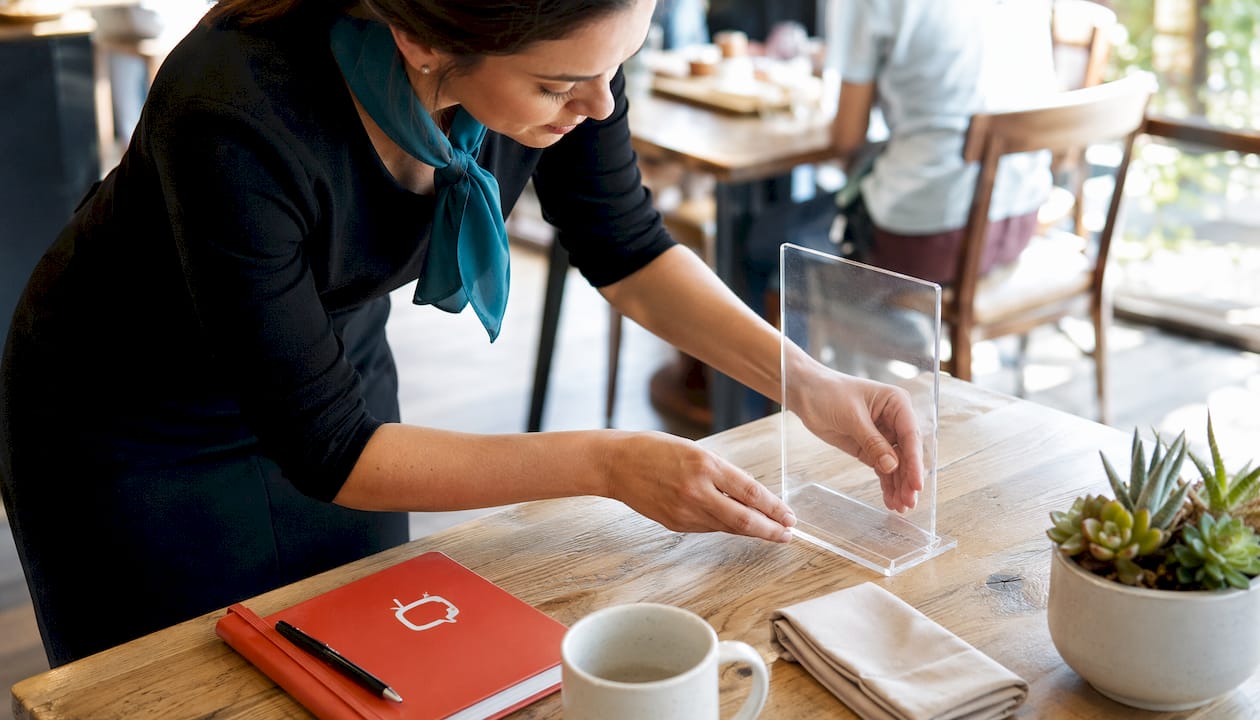
1. Tabletop displays
Tabletop displays work because they reach guests at the exact moment they are deciding what to order. Placed directly on dining tables, these holders can promote daily specials, limited-time offers, seasonal cocktails, or upsell add-ons like desserts and sides. They are durable, easy to clean, and allow frequent content changes without reprinting the entire menu. A table tent promoting a $12 dessert platter, for example, costs almost nothing to produce but can meaningfully lift average ticket size over a busy weekend.
2. Window posters and vinyl graphics
Your windows are prime real estate. Window posters and vinyl graphics communicate your brand, current promotions, or seasonal offers to anyone walking past, before they ever step inside. They work particularly well for short-term campaigns like a new brunch menu launch or a Valentine’s Day prix fixe. Vinyl graphics are especially practical because they can be applied and removed without damaging the glass, making seasonal swaps straightforward.
3. Menu boards: physical and digital
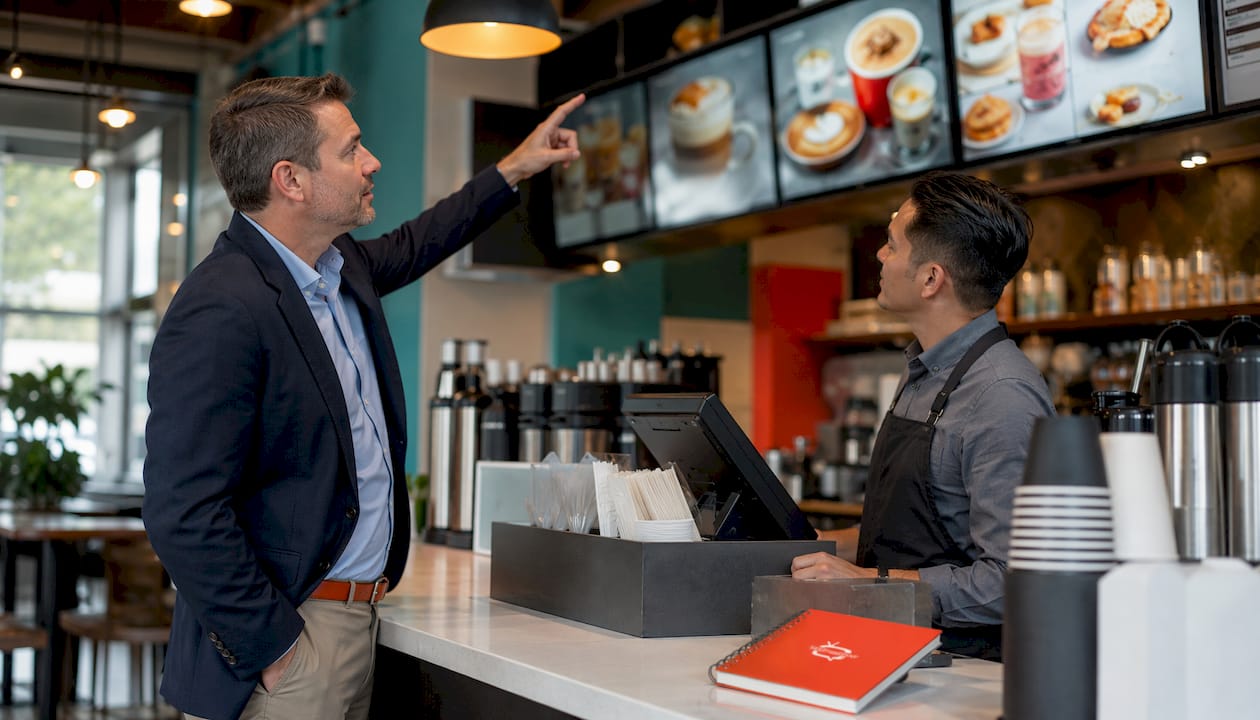
Physical menu boards, whether chalkboard or printed, give your space character and communicate permanence. The trade-off is that updating them takes time and money. Digital menu boards solve that directly: you can update prices, swap out specials, or rotate breakfast and dinner menus automatically without touching the screen. For quick-service restaurants, cafes, and fast-casual concepts, that speed is the whole point. The cost gap between a quality printed board and a digital display has narrowed considerably, making digital the stronger long-term investment for most operators.
4. Wall-mounted signage
Wall-mounted sign holders position promotions at eye level without consuming floor or counter space. Snap frames are particularly practical because swapping a poster takes seconds. Placed near the entrance, they make a strong first impression. Positioned in restrooms, they reach guests during a genuinely captive moment when there is nothing competing for attention. Wall-mounted holders work well for both indoor and outdoor use, making them one of the most versatile physical display formats available.
5. Acrylic sign holders
Acrylic sign holders offer a professional appearance, durability, and easy content swaps. Their transparency means the focus stays entirely on the content, not the frame. They come in sizes ranging from small table tents to larger menu displays, and they fit both tabletop and wall-mount configurations. For promoting signature dishes, happy hour details, or event bookings, acrylic holders blend cleanly with almost any interior design style.
6. Outdoor banners, flags, and sidewalk boards
Outdoor banners and sidewalk signs help attract foot traffic and promote daily offers effectively in high-traffic areas. They are budget-friendly tools that complement the main signage system and appeal to passing pedestrians. A sidewalk A-frame board with a handwritten daily special can pull in walk-by traffic that would otherwise keep moving. PVC banners hung on railings or exterior walls work well for seasonal messages, event promotions, and booking calls to action.
7. Digital signage screens
Digital screens go well beyond menu boards. A screen in your lobby or waiting area can display an events calendar, a countdown to happy hour, rotating dish photography, or a prompt to leave a Google review. Digital signage can integrate countdown timers and event calendars that sync with Google Calendar for automated updates, enabling hands-off management of promotional content that matches current campaigns and daily specials. That level of automation is hard to replicate with any physical format.
8. QR code displays
QR codes bridge your physical space and your digital presence without requiring any extra hardware. Printed on tabletop tents, window stickers, or dedicated display cards, they link guests directly to your online menu, loyalty program signup, or review page. A simple QR code display near the exit running on a loop can drive consistent review volume without staff involvement. The setup cost is minimal, and the ongoing maintenance is essentially zero.
9. Seasonal and event-specific displays
Rotating your displays around holidays, local events, or seasonal menu launches keeps the dining room feeling current and gives regular guests a reason to notice something new. Banner stands work well for advertising Christmas party bookings, Mother’s Day celebrations, or themed evenings. The key is treating these displays as a planned content calendar, not a last-minute afterthought. Swapping in a seasonal poster or updating a digital screen playlist two weeks before an event gives the promotion enough runway to actually drive bookings.
10. Interactive promotional displays
Interactive displays go a step further than static signage by inviting guests to take an action. A screen prompting a Google review, a QR code linking to a loyalty program, or a digital display running a poll about next month’s special all turn passive viewing into active engagement. These formats tend to perform best near high-dwell areas like waiting zones, bar seating, or checkout counters, where guests have a moment to pause and respond.
11. Point of sale displays
Point of sale displays are positioned at or near the checkout or ordering counter to encourage last-minute add-ons. Dessert cards, drink upgrade prompts, and combo deal signage placed at the counter can increase average ticket size with minimal effort. The message needs to be short and the visual needs to be clear. A cluttered counter display with too many options tends to produce the opposite effect, so keep it to one or two focused offers per display position.
How to place and design your displays for maximum impact
Strategic placement of promotional displays is more important than the number of signs. Overloading your space leads to “sign blindness,” where customers tune out all promotions because there is simply too much competing for attention. The goal is fewer, better-placed displays that each carry one clear message.
Focus your placement on what signage professionals call “captive moments.” These are the spots where guests have nothing else demanding their attention: waiting areas, restroom walls, bar seating while orders are being prepared, and the space near the exit. A wall-mounted snap frame in a restroom cubicle, for example, gives you the guest’s undivided attention for 30–60 seconds. That is genuinely more valuable than a poster in a busy corridor that gets glanced at for half a second.
Design principles matter just as much as placement. Keep these in mind:
Readability first: A beautiful sign that nobody can read from across the room is a wasted sign. Use high-contrast colors, large fonts, and minimal text per display.
Brand consistency: Every display should use the same logo, color palette, and typography. Inconsistent signage makes a restaurant look disorganized, even when the food is excellent.
One message per display: Promotional displays that try to communicate three offers at once communicate none of them effectively. Pick the single most important message for each location.
Seasonal freshness: Rotate physical displays at least monthly and digital content at least weekly. Guests who visit regularly will notice stale signage, and it signals that the restaurant is not paying attention.
QR code integration: Adding a QR code to tabletop tents or window displays connects guests to loyalty programs, online menus, or review pages with zero friction.
Pro Tip: Place your highest-value promotional message at the point where guests are waiting, not where they are walking. A guest standing still for two minutes will absorb a display far more effectively than one passing it at full stride.
Cohesive visual merchandising across all your display types, physical and digital, creates a professional impression that guests associate with quality. It also makes your promotions feel intentional rather than improvised.
Why effective promotional displays directly improve your bottom line
Promotional displays increase customer awareness of specials and events, leading to increased sales and repeat visits. They also reinforce brand identity through consistent use of logos, slogans, and signature dish imagery. That combination of sales lift and brand reinforcement is what makes a well-executed display system one of the highest-return marketing investments available to a restaurant operator.
The business impact shows up in several concrete ways:
Upselling: Tabletop displays and point of sale signage prompt guests to add desserts, drinks, or premium options they would not have considered otherwise.
Foot traffic: Outdoor banners, window graphics, and sidewalk boards attract walk-by customers who were not already planning to visit.
Order accuracy: Clear menu boards, physical or digital, reduce miscommunication between guests and staff, cutting errors and improving service speed.
Repeat visits: Event and seasonal displays remind existing guests of upcoming reasons to return, from a themed dinner to a holiday party booking.
Brand perception: Consistent, well-maintained signage signals professionalism. Guests make quality judgments quickly, and a polished display environment contributes to a positive first impression.
Durability and maintenance also factor into the return on investment calculation. Acrylic holders and waterproof outdoor display cases cost more upfront than basic printed materials, but they last far longer and require less frequent replacement. A lighted outdoor menu display case protects your menu in all weather conditions and projects a professional image to guests who are still deciding whether to come in.
Restaurants that combine physical signage with digital displays gain better promotional flexibility and operational control. The hybrid approach lets you attract new customers with exterior physical signage while keeping regulars informed with dynamic digital offers that change daily.
How digital signage takes your restaurant promotions further
Digital signage handles the content that physical displays simply cannot manage efficiently: daily specials that change at noon, happy hour countdowns, event calendars that update automatically, and review prompts that run on a loop without any staff involvement. For restaurants with a fast-moving menu or a busy events program, the ability to update menus and prices remotely without delays or print costs is a genuine operational advantage.
The practical capabilities of a well-configured digital signage system include:
Day-part scheduling: Show a breakfast menu in the morning, switch to lunch at noon, and display dinner specials and events in the evening, all automatically.
Countdown timers: Build urgency around happy hour end times or limited-time offers without any manual updates.
Google Calendar sync: Display upcoming events, private dining bookings, or live music nights that update the moment you edit the calendar.
QR code and review prompts: A screen near the exit running a simple loop can drive Google reviews and social follows consistently.
Rotating promotions: Cycle through dish photography, seasonal offers, and brand content on a single screen without buying new hardware.
Combining digital screens with physical displays gives you the best of both formats. Physical signage anchors your brand identity and works without power or connectivity. Digital screens handle the fast-moving, time-sensitive content that would otherwise require constant reprinting. For a practical overview of how to set this up, the digital signage for restaurants getting started guide covers the key decisions from screen placement to content scheduling.
One often-overlooked benefit of digital signage is the reduction in manual errors. When a price change or a sold-out item update goes live instantly across every screen, the risk of a guest ordering something that is no longer available drops significantly. That kind of operational accuracy improves the guest experience in ways that are hard to measure but easy to notice.
Pro Tip: Schedule a weekly 15-minute content review for your digital screens. Updating one or two images or swapping a promotion takes minutes but keeps your displays feeling current for guests who visit multiple times a week.
For restaurants running seasonal menus, digital displays are especially valuable. The case for digital displays for seasonal menus is straightforward: you can launch a new seasonal menu across every screen in the building in the time it takes to save a file, with no print lead time and no disposal cost for outdated materials.
Real-world examples of promotional displays that work
The most instructive examples of effective restaurant promotional displays share one trait: each display has a single, clear job. A tabletop tent that promotes only the dessert of the week outperforms one that lists five different offers. A window graphic that communicates one seasonal promotion gets read; one that tries to advertise three things at once gets ignored.
Consider how a casual dining restaurant might use a layered display system across a typical week. Exterior: a sidewalk A-frame board with the daily lunch special written by hand each morning. Windows: a vinyl graphic promoting the current seasonal cocktail menu. Entrance: a banner stand advertising the upcoming private dining package for the holiday season. Tables: acrylic tent cards with the dessert of the day and a QR code linking to the loyalty program. Near the exit: a digital screen rotating between a Google review prompt, a dish photo, and a countdown to Friday happy hour.
Each display in that system has one message and one location. None of them compete with each other. The result is a guest who moves through the restaurant encountering relevant, readable promotions at every natural pause point, without feeling like they are being sold to at every turn.
Seasonal campaigns work particularly well when physical and digital displays are coordinated. A restaurant running a Valentine’s Day promotion, for example, might use window vinyl to announce the event, a banner stand near the host stand with booking details, tabletop tents with the prix fixe menu, and a digital screen with a countdown to reservation close. Each format reinforces the same message through a different channel, and the coordination makes the campaign feel polished rather than piecemeal.
The role of digital signage in table turnover is another practical example worth noting. Screens that display wait times, queue updates, or “your table is ready” messages in waiting areas reduce perceived wait time and keep guests engaged rather than frustrated.
How much do different restaurant display types cost?
Cost varies widely depending on the format, material quality, and whether the display is physical or digital. Physical formats are generally lower upfront but carry ongoing costs for printing, replacement, and maintenance. Digital formats require a higher initial investment but reduce recurring print costs and offer far greater content flexibility.
Display type | Relative cost | Flexibility | Maintenance |
Tabletop acrylic holders | Low | High (easy content swap) | Minimal |
Window posters and vinyl graphics | Low to medium | Medium (seasonal swaps) | Low |
Printed menu boards | Low to medium | Low (reprint required) | Low |
Wall-mounted snap frames | Low | High (poster swap in seconds) | Minimal |
Outdoor banners and sidewalk boards | Low | Medium (reprint for changes) | Low to medium |
Waterproof outdoor menu display cases | Medium | Medium (manual update) | Low |
Digital menu board screens | Medium to high | Very high (instant remote update) | Low (software managed) |
Full digital signage system | High upfront | Very high (automated scheduling) | Low (cloud managed) |
Physical formats like outdoor banners and sidewalk signs are budget-friendly entry points that complement a broader signage system without a large capital outlay. They work well for restaurants that are just building out their display strategy and need immediate results at low cost.
Digital signage carries a higher upfront cost but pays back through eliminated print expenses, faster content updates, and the ability to run multiple promotions across multiple screens without additional materials. For restaurants with frequently changing menus or active events programs, the math tends to favor digital within the first year of operation. A practical look at how digital menu updates work for restaurants shows exactly how the content management process reduces both time and cost compared to printed alternatives.
The most cost-effective approach for most restaurants is a hybrid system: invest in durable physical holders (acrylic, snap frames, waterproof outdoor cases) that last for years, and use digital screens for the content that changes frequently. That way, you are not reprinting every time a price changes or a special sells out.
Signstream makes digital restaurant displays easy to manage
Running a restaurant means your attention is already stretched. Signstream gives you a digital signage platform built for exactly that reality: update every screen in your restaurant instantly from any device, with no technical expertise required. You can schedule day-part menus, run countdown timers for happy hour, display your events calendar, and prompt guests for Google reviews, all from one dashboard.
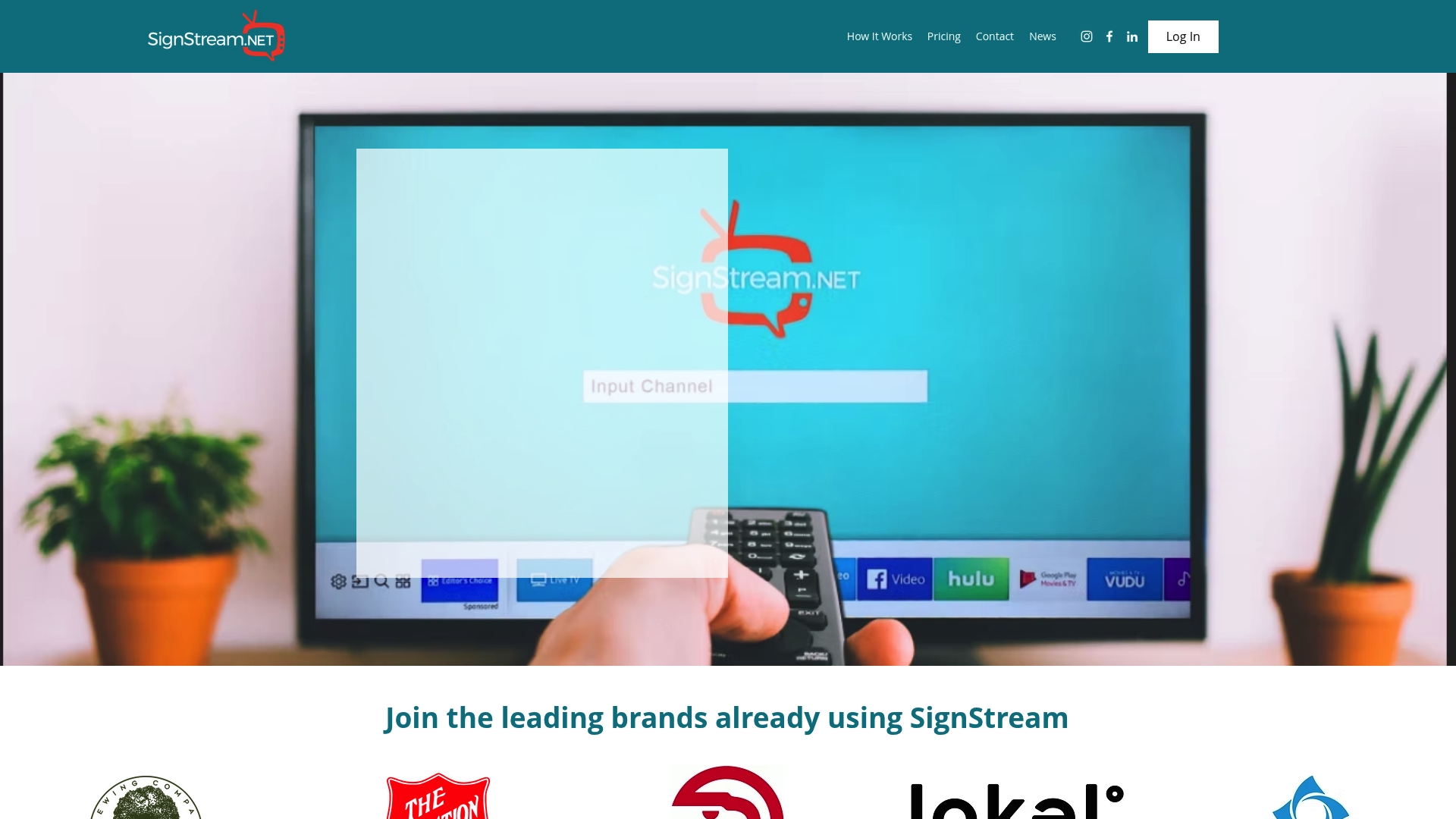
What sets Signstream apart from a basic screen setup is the ad exchange marketplace, which lets you cross-promote with other local businesses and generate revenue from your own screens. Deploy across unlimited screens at no extra charge, and manage everything from the same place you already run your promotions. Restaurants using Signstream have reported improved engagement metrics post-implementation, according to the brand. If you want to see how it fits your specific setup, book a free consultation and get a clear picture of what your screens could be doing for your business.
Key Takeaways
Restaurants that combine physical and digital promotional displays consistently outperform those relying on a single format, because each type handles a different job in the customer journey.
Point | Details |
Physical displays anchor the brand | Tabletop tents, acrylic holders, and wall-mounted frames deliver promotions at key decision points with minimal ongoing cost. |
Placement beats quantity | Strategic placement in captive moments like waiting areas and restrooms outperforms a high volume of poorly positioned signs. |
Digital signage removes print delays | Cloud-managed screens update instantly across every display, eliminating reprint costs and reducing menu errors. |
Hybrid systems offer the best ROI | Durable physical holders combined with digital screens for fast-changing content deliver the strongest long-term return. |
Signstream manages it all in one place | Signstream’s platform lets restaurants update unlimited screens instantly, schedule content, and earn revenue through its ad exchange marketplace. |
Recommended
Comments