

11 Research Backed Digital Signage Rules for Internal Comms and HR

Yes, digital signage can improve employee communication when you run it as a governed broadcast channel and pair it with a mobile or two-way tool for verification. Behavioral science backs this up: the EAST framework shows that messages perform better when they’re easy, attractive, social, and timely, and industry research shows screens score well for crisis communication and perceived support.
TL;DR:
Placing screens in high-dwell areas like break rooms and ensuring clear, trusted content with regular audits improves engagement and trust.
Using branded, consistent templates and short, focused slides helps employees recognize and process messages quickly during their shifts.
Integrating live feeds, automatic data updates, and measuring engagement metrics like dwell time enhances relevance and demonstrates value to stakeholders.
Starting with a small number of screens and simple content before expanding prevents overload, while involving managers and gathering feedback builds buy-in.
Reliable hardware, remote management, and proper placement are essential to avoid ignored screens and ensure continuous, effective communication.
Table of Contents
Top digital signage best practices for employee communication
Screens work best when treated as a managed channel with clear rules, not a set-and-forget display. Follow a checklist and you avoid the two most common failures: content nobody reads and screens nobody trusts during an emergency.
Place screens where people stop, like break rooms and time clocks, not just where they walk past quickly.
Reserve an emergency broadcast slot on every screen so urgent messages can override the regular rotation instantly.
Limit each slide to one message. A screen trying to say three things says nothing clearly.
Set display duration windows. Short announcements work well at 6 to 12 seconds; dashboards and KPI views can run longer since people glance at them repeatedly.
Schedule by daypart. Pre-shift briefings, lunch-hour recognition content, and end-of-shift wrap-ups each deserve their own playlist.
Use consistent branded templates. Repeated colors, fonts, and layouts speed up recognition, a concept researchers call processing fluency.
Favor real photos over stock imagery, especially for recognition content. Employees engage more with people they recognize.
Assign content owners by content type. Safety owns safety slides, HR owns recognition, operations owns KPI dashboards.
Set approval service-level agreements so content doesn’t sit in a queue for days before it reaches a screen.
Integrate live feeds instead of static screenshots, so a shift-change dashboard actually reflects the current shift.
Measure uptime, dwell time, and QR interactions, then adjust slot allocation based on what people actually stop for.
Pro Tip: Audit your slide rotation every quarter and cut anything that hasn’t changed in 90 days. Stale content is the fastest way to lose the room.
Where to place screens and how to choose hardware
Placement decides whether your content gets seen or ignored. High-dwell spots like break rooms, time clocks, and elevator lobbies earn longer, denser content. Transit spots like hallways need short, glanceable messages since people are moving.
Mount at eye level for the typical viewing distance, and check ambient light for glare before you commit to a spot.
Choose commercial-grade displays over consumer television sets. They’re built for continuous operation and hold up longer under daily use.
Pick a reliable playback device and mount it securely, ideally in a tamper-resistant enclosure in public-facing areas.
Plan for remote device management from the start, along with stable network access and a dedicated power source, so a screen going dark doesn’t require an on-site visit.
Content design and scheduling rules that keep screens relevant
Good signage content follows a small set of rules that keep it readable at a glance and consistent across every location. Each slide should carry one focal message in large, legible type, using the same colors and layout elements every time so employees recognize a “safety alert” or “shift update” instantly. That consistency in visual design speeds up processing fluency, which is why brand consistency matters well beyond marketing, as this guide on brand consistency points out.
Keep announcement slides short, around 6 to 12 seconds, so a full loop doesn’t overstay its welcome.
Give dashboards more time on screen since employees tend to glance at them more than once during a shift.
Build modular templates for announcements, KPI dashboards, recognition posts, and safety reminders so new content slots in fast.
Target playlists by zone or shift where it genuinely matters, but avoid fragmenting content so much that your team spends more time producing variants than communicating.
Pro Tip: Build five templates and reuse them relentlessly. A recognizable format builds more trust than a fresh design every week.
Common use cases and content types for workplace signage
Signage earns its budget line when it maps directly to organizational goals instead of running generic filler.
Operational updates: shift boards, production KPIs, and downtime alerts keep teams aligned in real time.
Safety and compliance: pre-shift briefings, SOP reminders, and a reserved emergency broadcast slot for urgent notices.
HR and culture: peer recognition, onboarding prompts, benefits reminders, and event promotion, all covered in more depth in SignStream’s onboarding use case guide.
Wayfinding and space status: meeting room availability and directional signage, which also cuts down on front desk queries.
Engagement activations: QR-code surveys, recognition nominations, and quick learning nudges tied to a specific campaign.
Governance, integrations, and measurement that prove value
A screen network without governance turns into a dumping ground for outdated flyers. Assign a content owner for each category, safety, HR, operations, and give each owner a publishing service-level agreement plus guaranteed access to the emergency broadcast slot.
Connect calendar and event feeds so room status and event promotion update without manual editing.
Integrate HRIS or workforce management systems to pull shift schedules and recognition data automatically.
Add single sign-on for content administrators to simplify access control across locations.
Track uptime, opportunity-to-see, dwell time, and QR scans, then report on a fixed cadence, monthly works well for most teams.
A 2026 industry survey found that 72% of employees see workplace screens as a low-friction way to stay informed, as long as the messaging stays clear and non-repetitive, according to Korbyt’s commissioned study with Reworked. That figure is a strong argument for investing in proper analytics dashboards rather than guessing which slides are working.
Why this works: behavioral science and industry proof points
The EAST framework, easy, attractive, social, timely, gives communicators a practical filter for every slide before it goes live. Consistent visual branding speeds recognition, and social content like peer recognition consistently draws more attention than generic announcements.
Digital screens and employee apps receive high ratings for crisis communication and perceived support, but adoption as a primary channel remains low, so a mixed-channel approach performs best. 2025 US Employee Communication Impact Study, Staffbase
A client after implementation reported a 25% rise in class attendance, a figure worth requesting from any vendor pilot alongside uptime and dwell-time data before you build your own business case.
Training and support for content creators and administrators
A signage network only stays useful if the people feeding it know what they’re doing. Start with a short onboarding session for anyone who will publish content, covering template use, image sizing, and how the approval workflow routes their submissions.
Administrators need a separate track that covers device health monitoring, network troubleshooting, and how to trigger the emergency broadcast slot when something urgent happens. Document these steps once and keep the reference short. A ten-page manual gets skimmed once and ignored; a one-page quick reference gets used every week.
Build in a standing office hours slot, even 30 minutes biweekly, where content owners can ask questions and share what’s working. This does more for adoption than a formal training deck ever will, since most confusion comes up in the first few weeks of actual use, not during initial training.
Give new content creators three or four working templates before they’re asked to build anything from scratch. Confidence with the tool comes faster when the first attempt is filling in a template rather than designing a layout from nothing.
Change management and employee adoption strategies
Rolling out screens without preparing the floor for them is the fastest way to get ignored displays. Tell employees why the screens are going up before they go up: what problem they solve, what they’ll see, and how it changes anything about their day.
Bring frontline managers into the process early rather than announcing the rollout to them alongside everyone else. Managers who understand the plan can answer questions on the floor, which matters more than any all-hands announcement.
Start with content that has obvious, immediate value, shift schedules, safety reminders, or recognition shoutouts, rather than leading with corporate messaging. Early wins build trust in the channel faster than a perfectly designed launch slide ever will.
Close the loop by asking for feedback after the first few weeks and acting on it visibly. If someone flags that a slide runs too long or a message wasn’t clear, fix it and let people see the change. That’s what turns a screen from wallpaper into a channel people actually check.

A practitioner’s take on rollout mistakes and pilot paths
Most signage rollouts fail from doing too much, too fast. Start with two or three high-dwell screens, measure dwell time and QR interactions before expanding. Don’t overload slots. A tight, consistent rotation beats a cluttered one every time. Equip managers with talking points and close the feedback loop, or trust erodes fast.
— DKS
SignStream as a practical next step for your rollout
Once you know the practices that work, the harder part is running them without a full-time signage team. Some digital signage platforms update unlimited screens instantly from any device, so a shift change or a safety alert can reach every display in seconds instead of waiting on someone to walk the building.
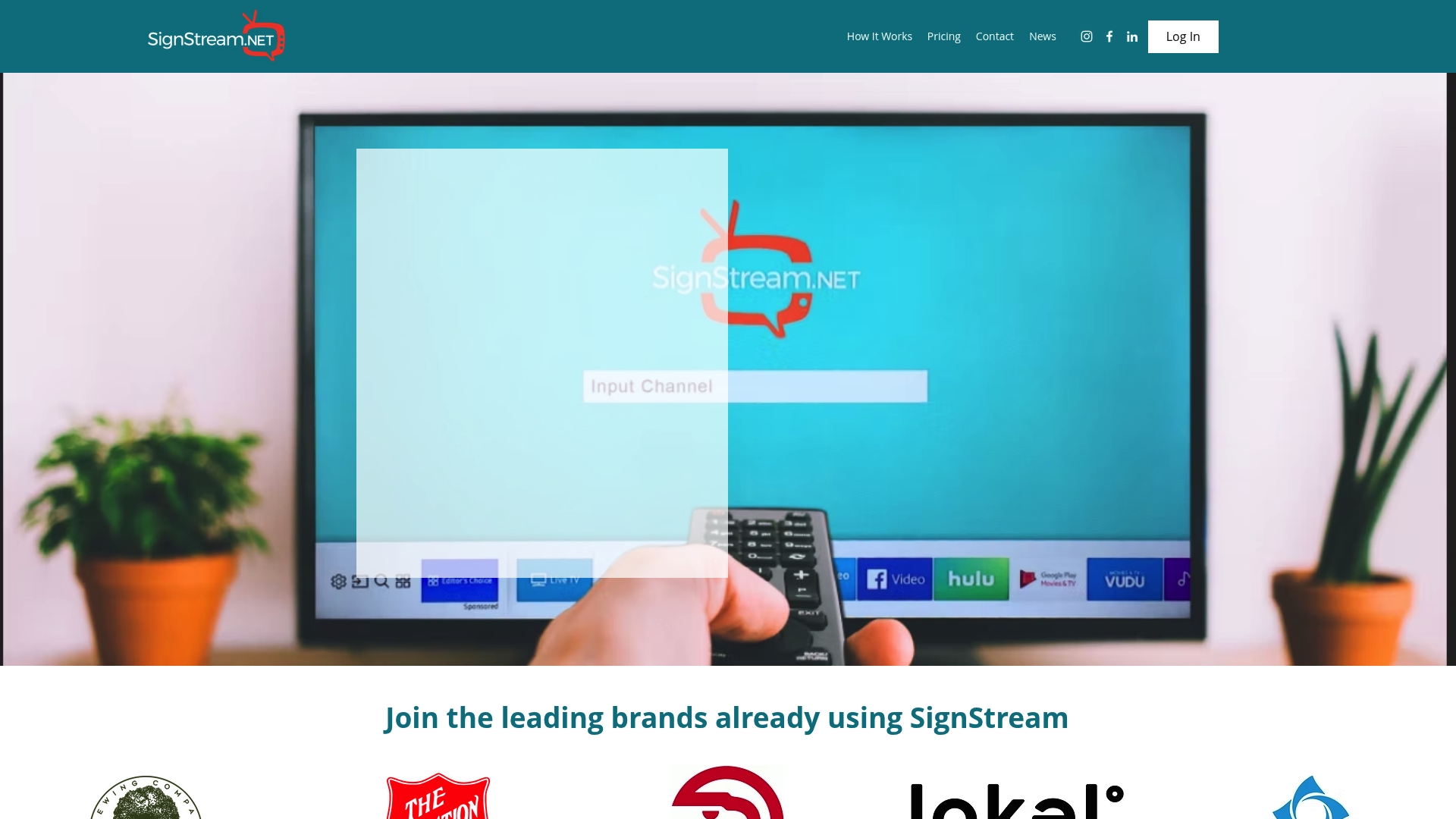
The platform includes built-in analytics for tracking the metrics covered above, and its ad exchange marketplace lets you offset costs by cross-promoting with other local businesses on your own screens.
Plan | Price | Best for |
See the pricing page for current details | Teams starting with a focused screen rollout | |
See the pricing page for current details | Organizations needing a fully custom channel setup |
If you want help mapping out placement, hardware, and content templates before you commit, book a free consult or check current pricing to see which plan fits your rollout.
Sources
FAQ
How long should an announcement stay on screen?
Short announcements work best at 6 to 12 seconds, while KPI dashboards can run longer since people tend to glance at them more than once. Keep loops tight so urgent content doesn’t wait too long to reappear.
Do digital screens replace mobile communication apps?
No, screens work best paired with a mobile or app-based channel rather than replacing it. Industry research from Staffbase shows screens score well for crisis communication but have lower adoption as a primary channel, so a mixed approach performs best.
What metrics prove digital signage is working?
Track screen uptime, opportunity-to-see, dwell time, and QR code interactions, then report on a fixed cadence. These metrics let you reallocate content slots based on what people actually engage with rather than guesswork.
How much does SignStream cost for a small rollout?
SignStream’s SIGNSTREAM NETWORK plan is $10 per month per channel, while the CUSTOM CHANNEL plan runs $105 per month per channel. Both include unlimited screen deployment with no extra per-screen fees.
What content works best for employee recognition on screens?
Real photos of employees paired with specific, timely shoutouts perform better than generic recognition templates. Pairing recognition content with the EAST framework’s social and timely principles, as outlined in ScreenCloud’s research, tends to drive stronger engagement.
Recommended
Comments